
The Wrongful Conviction of Christopher Tapp (Part 2)
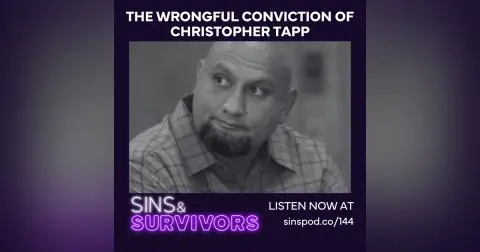


We talked about the horrible case of Angie Dodge last week and how Chris Tapp was convicted of her rape and murder. This week, we're talking about how and why Chris was convicted, and why it took another 20+ years to find the person truly responsible and get justice for Angie, but also for Chris
https://sinspod.co/144
https://sinspod.co/144sources
https://sinspod.co/144transcript
Become a supporter of this podcast: https://www.spreaker.com/podcast/sins-survivors-a-las-vegas-true-crime-podcast--6173686/support.
Domestic Violence Resources
http://sinspod.co/resources
Click here to become a member of our Patreon!
https://sinspod.co/patreon
Visit and join our Patreon now and access our ad-free episodes and exclusive bonus content & schwag! Get ad-free access for only $1 a month or ad-free and bonus episodes for $3 a month
Apple Podcast Subscriptions
https://sinspod.co/apple
We're now offering premium membership benefits on Apple Podcast Subscriptions! On your mobile device
Let us know what you think about the episode
https://www.buzzsprout.com/twilio/text_messages/2248640/open_sms
144 - The Wrongful Conviction of Christopher Tapp (Part 2)
Shaun Last week we covered the case of Angie Dodge, her life, her murder, and the investigation that led police to Christopher Tapp. We followed that case into the courtroom, where jurors heard recordings of Chris describing his involvement in Angie's death. Those statements helped persuade them to convict him. And then we left you with this. It would be almost another twenty one years before the police arrested the man who had actually killed her. So we need to go back because before Chris described being in that apartment, before he implicated himself, he gave police a very different account. He said he wasn't involved. He said he didn't know what had happened. Chris was twenty years old when those interviews began. By the time they were over, he had given those investigators the statements that would help send him to prison. What happened between those first denials and those later admissions?
John I think most of us hear confession and feel like that settles it, especially when it's recorded. You can hear the person speaking, and it's hard to get past that one question. Why would you admit to something so terrible if you hadn't done it? Chris had been sentenced to a minimum of thirty years in prison, but while he was serving that time, he ended up finding his most passionate advocate in a place you will never guess.
Shaun Hi, and welcome to Sins and Survivors, a Las Vegas true crime podcast where we focus on cases that deal with domestic violence as well as missing persons and unsolved cases. I'm your host, Sean.
John And I'm your co-host, John.
Shaun We mentioned last time that there's a lot to this case, and we weren't kidding. It was important to cover what happened to Angie Dodge, not only because her story deserves to be told, but also because it's impossible to only cover Christopher. Top story. They're too intertwined to be separate. Last week, we focused on Angie as the victim, her life, what was taken from her, and her family's search for answers. This week, we're looking at Chris as a victim. He was the victim of an investigation that went terribly wrong. Of assumptions that hardened into certainty and a justice system that failed to correct those mistakes for years. We need to understand how that happened, how the police came to believe he was involved, and how evidence that should have raised doubts couldn't stop the case against him, and how those failures cost him twenty years of his life. Through all of that, Angie's family was still waiting for the whole truth about her murder, and no one was more determined to find it than her mother, Carol. Carol is often described as a force of nature, based on every interview and every bit of footage we've seen of her. That description fits. Her determination would become central to both Angie's story and Chris's.
John At the time of Chris's conviction, Carol believed that he had helped murder her daughter. She was very clear that she wanted him to get the death penalty for his role in what happened to Angie. Her position changed pretty radically over the years, and to understand that requires going back to the investigation that convinced her and a jury that he was guilty. Christopher Connelly Tapp was born in Idaho Falls on July eleven, nineteen seventy six, to parents Vera and Peyton. Growing up, he played basketball and baseball. He wrestled and later attended Skyline High School. People who knew Chris remembered his generosity and sense of humor. They described him as caring and gentle. A big teddy bear. The kind of person who would give you whatever he had if you needed it. Chris was a little more than a year older than Angie, and both of them were part of a wider circle of young people we mentioned last week. The group, known as the River rats, who spent time along the snake River. But the connection that brought Chris into the police investigation of Angie's murder was actually his friendship with Benjamin Hobbs. On January five, nineteen ninety seven, Hobbs was arrested in Ely, Nevada, and charged with sexual assault. When Idaho Falls Police learned about that arrest, they began looking at him in connection with Angie's murder. They interviewed Hobbs and they started interviewing his friends. One of those friends was Chris Tapp on January seventh. Police questioned Chris about Angie's death. He told them he knew nothing about it and that he and Ben had no involvement. After that interview, he was released. Three days later. Police questioned him again, but the second time he gave them a different account. And as we said, it's easy to hear that Chris changed his story and take that as a reason not to believe him. What we need to look at is what happened before the story changed. What were the investigators telling him? What did they claim they already knew? What were they telling Chris would happen to him if he didn't give them the answers they wanted? His statements weren't volunteered. Naturally, they came during a series of interviews where police used lies, promises, and threats. And that's when Chris's account became increasingly incriminating.
Shaun One of the people questioning Chris was Detective Jared Fuhrman, who was someone that Chris already knew. He had been a school resource officer at two of Chris's schools. So naturally, Chris felt like he had reason to trust him. Years later, Chris would say that firemen used that familiarity to influence him. During the interviews, describing the pressure he felt, Chris told the Idaho Statesman, I was getting to the point where I just wanted to give the police whatever they wanted. This is one of the points we'll be sure to talk about in this week's swing shift. So if you want to hear that, make sure you get subscribed by visiting Singapore dot com slash subscribe. At the beginning, investigators were focused on Ben Hobbs. Their thinking was Ben Hobbs knew Angie since they grew up in the same circles, and Ben Hobbs had been accused of sexual assault. So to them, that was enough evidence to try and build a case for Angie's murder against him. At first, they wanted Chris to tell them something that connected his friend to Angie's murder. But Chris kept saying he didn't know anything. Over and over, through hours of grueling interviews. Then the investigators lied to Chris, telling him that Hobbs had placed him at the crime scene, And they told him they could help him if he cooperated. In a weird and deceitful strategy, they were trying to coerce information out of Chris by making it seem like he was the one under investigation. In one recorded exchange reproduced in a later investigative review, Detective Ken Brown pressed Chris about whether he had been there, and Chris pushed back, saying, no. You're trying to put me there. Unbelievably, the pressure on him also included thinly veiled threats with the possibility of execution. That same review documented a threat involving the gas chamber during Chris's January tenth polygraph examination. In a recording, the polygraph was heard saying that people like him get the gas chamber.
John During that January tenth interview, Chris changed his story and told investigators that Ben had admitted killing Angie and had asked him to provide an alibi to the police. This was huge, as the police say. False in one thing, false in and everything. Meaning? If you're lying about this, what else are you lying about? After that interview, Chris's parents hired an attorney. Another interview was scheduled for January eleventh, but Chris didn't show up. When officers went to his home, Vera told them that her son had a lawyer and would come in with that lawyer on January thirteenth. They tried to persuade Vera to let the questioning continue without an attorney, and she refused, which is exactly what she should do. People famously have the right to an attorney present when being questioned by the police. Police then obtained a warrant charging Chris with being an accessory to a felony, and they arrested him on the eleventh. Beginning on January fifteenth, his attorneys watched the questioning at the police building on a television monitor in a separate office, not in the room with him. And it's not clear why Chris could speak to them during breaks. But inside the interview room, he was facing investigators without a lawyer next to him.
Shaun By January fifteenth, Chris's story had changed even more. now. He was saying he was inside Angie's apartment with Ben Hobbs. He said Ben was angry with Angie because he believed she had helped break up his marriage. There was a serious problem with that supposed motive. According to a later review of the investigation, Hobbs estranged wife had already told Fuhrman on January tenth that Angie had nothing to do with their breakup. But the idea that Ben blamed Angie still became part of Chris's account. They also offered Chris two agreements that could get him out of the most serious charges. On January fifteenth and again on January seventeenth. Under the terms of these agreements, Chris had to cooperate and provide truthful information about Angie's death. He would plead guilty to aiding and abetting an aggravated battery, a felony. And the state agreed not to bring other charges against him in connection with the killing, the rape and the murder. On January seventeenth, the existing accessory charge was dismissed and Chris was released from custody. Looking back on it, it was a shocking level of back and forth.
John There was also the physical evidence. By January eighteenth, DNA testing had excluded both Chris and Ben Hobbs as the source of the semen recovered from Angie's body and clothing. Detective Bill Squires later explained that investigators believed another participant could have supplied that DNA. And during the stretch of questioning, another name became part of Chris's account. Jeremy Sargus, who was a close friend of Angie's. According to the case history published by the Innocence Project, investigators suggested Sargus involvement and Chris eventually said that Sargus and Hobbs had raped and killed Angie. They tested Sargus DNA, too, and he was also excluded and his alibi checked out. This is, of course, where you can start to see the problem with treating Chris's statements as the foundation of the investigation. When the evidence contradicted a version of his story, investigators just looked for another version that could preserve his involvement. And it's unclear why. The possibility that Chris's entire account was unreliable should have been getting serious attention.
Shaun On January twenty ninth, prosecutors told Chris and his attorney that they considered the immunity agreements void because, in their words, he hadn't been truthful, so investigators had helped steer him toward particular suspects. Chris had implicated them. Testing then failed to support those accusations, and prosecutors treated those contradictions as grounds to withdraw his protection. It was a no win scenario for Chris. His interviews continued that day. During a polygraph examination, Chris gave an even more incriminating account, saying that he had held Angie down while other men raped and stabbed her, and also implicated another person, someone named Mike, in place of Jeremy Sargis. He was now saying that he had physically restrained Angie during the attack, so police arrested him again and an accessory charge followed. The next day.
John On January thirtieth, Chris had yet another polygraph test this time. And remember, all this was recorded. Police suggested that he could receive more lenient treatment if his actions had resulted from being afraid for his own life. In that interview, Chris had said he cut Angie because Ben Hobbs threatened to kill him if he didn't participate. One of the investigators proposed a reason Chris might have joined the attack, and Chris then incorporated that reason into his account. They were also giving him false information about the results of the polygraph tests. At times they would tell him he was being truthful, but then at times they would tell him he was being deceitful. He was depending on the investigators to tell him what the results actually meant.
Shaun Investigators told him that he might have blocked out memories of what happened because the crime was so terrible, which gave them an explanation for his repeated statements that he didn't remember being there. Making a suspect doubt their own memories is a common tactic police use. Over the course of these interviews, investigators also supplied information about the crime. The Innocence Project's later review described officers feeding Chris details of the scene while using threats of execution and promises of leniency to obtain statements implicating him and other men. A person giving details about a crime can sound convincing. We might assume those details must have come from witnessing it, but we have to ask where that knowledge came from. Was the person there or did the police just describe the scene to him and show him photos of it? The recording served as a record of his incriminating statements, but they also preserved those questions, suggestions and the pressures surrounding his statements. I'm sure you can guess which parts of the interviews the jury heard.
John On February three, nineteen ninety seven, less than a month since his first interview. Chris was charged with first degree murder and rape, replacing the accessory charge along with an enhancement for the use of a deadly weapon. By the end, investigators had recorded him accusing other men, placing himself at her apartment and saying he had held Angie down and caught her. All of that was false, but it was now a part of the criminal case against him. Ben Hobbs, whose arrest in Nevada had helped set the sequence in motion, was never even charged with Angie's murder, and Jeremy Sargis had initially faced an accessory charge, but that charge was dismissed. The difference was the confession. Chris was the one left facing prosecution for rape and murder. There was no physical evidence linking him to the crime, and the semen DNA did not match him. But investigators had something to work with. His own recorded words.
Shaun Chris's defense tried to keep those words out of the courtroom. His attorneys challenged the statements on several grounds. They argued that the questioning had violated his right to counsel, that his statements had been involuntary, and that prosecutors were still bound by the immunity agreements they had made with him. Judge Ted Wood rejected most of their arguments. He excluded statements taken on January eleventh after Chris's arrest and before his attorney arrived, but allowed the rest to be used. His lawyer's job became to persuade the jurors that Chris's admissions were unreliable. The trial began on May twelve, nineteen ninety eight, in Bonneville County. By then, more than a year had passed since these interrogations. The recordings, along with the investigator's explanations of what they contained, became a major part of the prosecution's presentation.
John The prosecution's case depended on the claim that Chris had helped the other men attack Angie. Under Idaho law, intentionally helping someone commit a crime can make you legally responsible for that crime. Prosecutors didn't have to establish that Chris personally committed the rape, or inflicted the fatal injury to pursue convictions for rape and murder. That also helps explain how the case proceeded despite the DNA exclusion. Investigators believe that another participant could have supplied the DNA recovered from the scene, but they could still prosecute Chris. Chris didn't testify at trial, but witnesses offered an alibi. The witness claimed that Chris had spent the night of the murder with a woman he was having an affair with, and that Chris's girlfriend had discovered them together the following morning. There was some disagreement and back and forth about the date that had happened. So that cast doubt on the alibi. The defense was asking jurors to accept that Chris had been elsewhere, and that the incriminating account they could hear in his own voice was false. The prosecution also presented a witness who claimed she had heard him discuss the crime outside of the police station.
Shaun This was eighteen year old Destinee Osborne. Destinee said she had attended a party a few days after Angie's death, and overheard Chris and Ben Hobbs discussing the killing. She claimed Chris said he had held Angie down while others raped her and that he had stabbed her. And the testimony seemed to support parts of the recorded account. She also described a wild motive involving money allegedly owed for methamphetamine, and there was no evidence for any of that claim. Under questioning from defense attorney Robert Booker, Destinee also implicated Jeremy Sargis, the man whose DNA hadn't matched and whose charges had been dropped. He challenged her ability to accurately recall the conversation. Destiny acknowledged that she had been high at the party. She stood by her testimony, saying, I know what I heard. The problem is that while this seems to support the recorded confession, her claim still needed to be evaluated on its own reliability. Similarity to a confession could make testimony sound persuasive without resolving the problems in either account.
John Investigators also presented Chris as someone who knew the details of the crime. Fuhrman testified that Chris had known what Angie was wearing before police showed him crime scene photos. After all, how could Chris know those details unless he had been there? A later examination of the recordings found that his statements about her clothing came after he had seen the photographs, so he was essentially describing a photo they showed him. And by the end of this trial, Chris's defense had not persuaded the jury to reject the case built around his statements.
Shaun On May twenty eight, nineteen ninety eight, the jury found Kriss guilty of first degree murder and rape. They also returned findings supporting that deadly weapon enhancement on both of the counts. Carol Dodge had attended every day of the trial. At this point, she believed Kriss had helped kill her daughter, and she wanted him to be sentenced to death for the crime. Kris later described his reaction to the verdict as pure sadness. He said I couldn't believe I was going away. The prosecution was seeking the death penalty.
John Kris was sentenced on December eleven, nineteen ninety eight. Judge wood declined to impose the death penalty. In explaining that decision, the court considered factors including Kris youth, his lack of documented history of violence and the understanding within the account accepted at trial that he had not personally committed the rape or inflicted the fatal wounds for the murder conviction and weapons enhancement. The sentence was life plus fifteen years with a fixed minimum of thirty years before parole eligibility for the rape. He He received a twenty year sentence with a ten year minimum. That sentence ran concurrently with the murder sentence, meaning they would be served at the same time. So the minimum he was facing was thirty years. During sentencing, Judge Wood said that had Mr. Tapp not confessed, there would have been no conviction in this case. Chris was twenty two years old, facing the possibility of spending the rest of his life in prison. To get his freedom back, he would have to find a way to overturn that conviction. This is a good place to take a break, and we'll be right back.
Shaun Meanwhile, Carol Dodge was still demanding answers about her daughter's murder. Chris had been convicted, but the bodily fluids recovered at the crime scene did not belong to him. That meant the person or people responsible were still out there for Carol. Putting Chris in prison could never be the end of the investigation. She wanted everyone responsible, identified, and held accountable. At that point, she believed Chris knew more than he was admitting. She believed he could help identify the person whose DNA had been left behind. As the years passed without that answer, her frustration grew. She wanted police to finish the job. Who else had been in that apartment? Whose DNA was it and why? With that evidence available, had they still been unable to identify him? Those questions kept her searching long after the trial was over.
John And Carol took matters into her own hands and started her own investigation. She collected documents and reports and went back through them repeatedly. She later told ABC news that she went to the police station every day to check on the investigation. She wanted to know what was happening and what was being done to find this unidentified man. She also went out looking for information in an account featured in ABC's The Snare. Carol described questioning people and following leads into the early morning, sometimes staying out until four or five a m then she would bring what she had learned back to the police. A post register journalist told the Wrongful Conviction Podcast that Carol would walk past the front desk at the police station and go directly to the chief's office, demanding progress. According to this account, the department eventually installed doors separating the public lobby from the offices to prevent her from doing that. They became known as the Carol doors.
Shaun That search eventually brought Carol into contact with people who were examining Chris's claim of innocence. In October two thousand and seven, Chris had written to the Idaho Innocence Project, led by DNA scientist Graham Pinkerton at Boise State University, asking for help with his case. By two thousand and eight, Carol and Chris were both working with the project and Idaho Falls Police to pursue additional testing of crime scene evidence, but they were approaching that testing with different goals. A report published by the Idaho Statesman that year makes Carol's position very clear. She said she was not hoping for or expecting Chris to be exonerated. She still believed multiple people had attacked Angie. She wanted testing to help establish who they were and how many had been involved. The testing Chris hoped would help clear him was the same testing that Carol hoped would locate the other people involved.
John Carol also returned to the evidence that helped convince her Chris was guilty. His recorded statements. In two thousand and eight, she began studying approximately sixty hours of interrogation footage, watching them and studying them over and over. Previously, she had seen portions presented during the trial. Now she was examining the longer sequence of interviews and polygraph sessions, looking for something that might help explain what had happened to Angie. As she was watching them, something seemed very off to her. Chris seemed totally ignorant of the details of Angie's apartment, like its layout, and even the crime itself. Things like where she was discovered. As she watched, she saw the investigators show him crime scene photographs and started wondering, did he know the details because he was there, or was it because he had been shown the photos by the police? Carol later told Dateline, I wanted to put my fist through the TV. The recordings gave her a way to examine how his account had developed. She could follow the questions the information investigators introduced, and then the changes in his answers. The confession she'd accepted at the trial began to look very different when she could see the process that had produced it.
Shaun As Carroll's understanding changed, she contacted Chris's defense attorney, John Thomas. In an interview, John said that when he got that call, he was really concerned, like, oh no, here we go. But he was thinking this conversation was probably a bad idea. But he took the call, and to his shock, Carroll told him she believed Chris was innocent. She'd come to believe that the justice system had failed Angie by imprisoning someone who wasn't involved, while the person responsible remained at large. So helping Chris became part of her fight for justice for Angie Carroll could study the evidence, bring in experts and demand that people reconsider what had happened. Chris's attorney still had to persuade the courts to act, and even obtaining more DNA testing would become a battle.
John While Carroll was re-examining Angie's murder, Kris's attorneys were continuing to challenge his conviction. Some of the challenges were petitions for post-conviction relief requests, asking the court to reconsider the conviction because of things like inadequate legal representation or evidence that hadn't been properly presented. On March thirty one, twenty ten, the Idaho Court of Appeals sent parts of his case back for further consideration. His attorneys argued that the lawyers who originally represented him had failed to present important evidence when trying to keep his confession out of court. That included information about his learning difficulties and mental health, and how those issues might have made him more vulnerable during questioning. Ultimately, the lower court dismissed the remaining challenge again, and on November twenty one, twenty thirteen, the Court of Appeals upheld that dismissal. The additional evidence had not persuaded the courts that his January twenty nine statements were legally involuntary.
Shaun The effort to obtain more DNA testing was moving through its own obstacles. In January of twenty twelve, a judge denied the request for additional testing. The reason seemed to be the same as it had been before, that identifying someone else's DNA would not necessarily establish that Chris hadn't participated. Some additional testing was performed on Angie's shirt, sweatpants and a teddy bear recovered with her body. Chris and Ben Hobbs were again excluded as contributors, which of course, didn't change anything for Chris.
John In twenty thirteen, Carol contacted Steven Drizin, a Northwestern University law professor who studied false confessions. She asked him to examine the interrogation recordings. Drizin later recalled how unusual it was to receive that request from the victim's mother. His twenty fourteen report concluded that Chris's confession had been produced through coercion, and that investigators had supplied details that made his statements appear more credible. Judges for justice conducted a separate investigation as well. Former FBI agent Stephen Moore reviewed records, examined the evidence, and interviewed people connected to the case. His October twenty fourteen report challenged the police investigation and concluded that substantial evidence supported Chris's innocence. Retired judge Michael Heavey, another central figure in that organization, also spent extensive time studying the recordings. He focused on the polygraph sessions. He believed those recordings helped explain how Chris had moved from denying involvement to describing himself actually participating in the crime.
Shaun In May twenty sixteen, John Thomas filed a new petition for post-conviction relief for Chris. In the filing, he claimed, among other things, that the original defense had not received recordings of three polygraph sessions. He argued that these videos showed a pattern. Investigators told Chris he had failed, pressed him to change his account, and then questioned him again for the defense. The recordings helped explain why his story kept changing. Chris was being taught that his own recollection could not be trusted, and that changing his answers was the way to satisfy the investigators. Chris himself has said that at the time he'd have said anything. He just wanted to go home. It's not even about the polygraph and its reliability in determining guilt. More importantly, it shows what the investigators did to him. The argument was that the missing material could have helped the original defense demonstrate that the confession was coerced. They also alleged that the interrogation methods had deprived Chris of a fair trial.
John His attorneys also had additional DNA results that addressed a specific part of the prosecution's account. Remember, he had said that he held Angie down during the attack. Swabs had been collected from Angie's hands during the original investigation, but they went untested for years when they were eventually analyzed. Thomas said the testing identified Angie s DNA and DNA from an unidentified man, but it did not identify Chris. Despite all this, the prosecution continued to defend his conviction. Bonneville County Prosecutor Danny Clark emphasized that the original jury had already heard that Chris did not match the DNA results from samples taken at the crime scene. It had also heard the defense argued that his confession was false. In Clark's view, those arguments had been considered and rejected at the trial. At that point, Chris was nearly forty years old, and he had spent almost half his life in prison.
Shaun Before another appeal in twenty seventeen. John Thomas and Danny Clark reached an agreement that Chris's rape conviction would be vacated and the charge would be dismissed, along with the associated weapons enhancement charge. The first degree murder conviction would remain along with its weapons enhancement, but Chris's sentence would be. But Chris's sentence would be reduced to a fixed term of twenty years, with credit for the time he had already served, which would allow him to get out of prison immediately. In exchange, Chris would withdraw his pending post-conviction challenges and waive his appeal rights under the agreement. Thomas explained that Chris would not have to stand in court and make a new admission that he had participated in Angie's murder. The existing jury conviction would just remain in place. He would leave without probation or parole. It was an opportunity to. It was an opportunity to regain his freedom. But the legal record would still identify him as someone convicted of murdering Angie Dodge. He would still technically be a convicted felon.
John That was an enormous decision to put in front of someone who had already lost twenty years of their life. There was risk in continuing with the upcoming hearing if Chris had lost. He was looking at approximately another ten years before becoming eligible for parole, and eligibility doesn't guarantee release. Even winning at the hearing might not bring immediate freedom, because the state said it would appeal an unfavorable decision, leading to yet more litigation, delay and jail time. Some of Chris's advocates wanted him to keep fighting. Judge Heavey later wrote that he tried to persuade Chris to reject the agreement because he believed the upcoming hearing could clear him completely. But in the end, Chris accepted it.
Shaun On March twenty second, twenty seventeen, Chris appeared before Judge Alan Stevens at the Bonneville County Courthouse. His mother, Vera, was there along with Carol Dodge. Carol addressed Chris in court, reading from a letter she said Angie had inspired her to write. Today is a new chapter, she told him. Go forward without bitterness and without a hardened heart. Chris walked out of the courtroom with John Thomas down the stairs and through the courthouse doors to the supporters waiting outside. I never thought this day would come, he said. He had entered custody at twenty. He was leaving at forty. He'd been released from prison, but his murder conviction remained. The agreement had not declared him innocent.
John This is a good place to take a break. So we will be right back. Getting released allowed him to go home. Clearing his name would require another fight. and for Carol she was left with the question whose DNA had been left in her daughter's apartment. She continued working with police, pursuing the man whose DNA investigators had been unable to identify. In November of twenty eighteen, she reached out to a genetic genealogist named CC Moore, who worked with the DNA technology company Parabon Nanolabs. Earlier that year, investigative genetic genealogy had helped identify the Golden State Killer. It offered investigators a way to follow DNA evidence through a person's relatives, potentially reaching someone whose own DNA had never appeared in a police database. If it could find the Golden State Killer, maybe it could locate the person who killed Angie.
Shaun We've talked about genetic genealogy a lot in the past, but as a reminder, a conventional forensic DNA comparison can tell investigators whether a person's DNA matches evidence from a crime scene. Police can also search a crime scene profile against profiles held in law enforcement databases. But an unidentified profile can remain unidentified if there's nothing to match it against. Having someone's DNA doesn't tell you their name. Genetic genealogy looks at a much larger set of genetic markers. It allows researchers to identify more distant relationships. The person who left the evidence might never have taken a genealogy test, but a relative of theirs might have. In Angie's case, Moore used GEDmatch, a website where people can upload their genetic results from consumer testing services and compare them with other users. She was looking for people who shared DNA with the unidentified man, and for connections among those people. Those matches could point toward a family. Finding the particular person within that family would take research.
John But before she could do that work, there was a problem with the evidence itself. The sample was degraded after more than twenty years. Moore told The Marshall Project that it contained only about sixty one percent of the genetic information analysts would typically want for this work. There were concerns that it wouldn't be usable. Despite the limitations, though, Moore was able to begin building a network of relatives. The next step involved records, births, marriages, deaths, census entries, newspaper archives and obituaries. Researchers traced the relatives families backwards, looking for a shared ancestor. Then they work forward through those ancestors descendants, trying to find where the unidentified person could fit a surname, might change. A marriage, might be missing from an online tree. A child might appear in a record that nobody had checked. The genetic evidence provides relationships to investigate, but people still have to reconstruct the family history.
Shaun Moore told ABC news that the family connections in this case led back to a marriage in the eighteen hundreds. Working forward through that couple's descendants, she identified six men to consider. Of those, five lived more than a thousand miles away with no connection to Idaho. That her team had found the remaining man lived in Idaho. Investigators traveled to where that man lived, and over several days secretly obtained DNA samples from him and his son. Unfortunately, his DNA didn't match the crime scene evidence, which was an incredible blow to the investigation. There was another complication. The genetic comparison showed that he was more distantly related to the unidentified man than Moore had expected. That made the remaining candidates on that branch less promising, too. So they had to reconsider the entire family tree. According to the police department's account, investigators and Moore discussed the setback in early May of twenty nineteen. They began looking for a descendant who hadn't appeared in their research. It was an obituary in a small libraries digital records that helped reveal that missing connection.
John The records led to a short marriage that had a child, but the marriage ended before the child was born. That child belonged biologically to the family Moore was tracing, but he had grown up using his stepfather's name, which helped explain why he hadn't appeared in the original candidates. His name was Brian Leigh Dripps senior. Now, investigators had someone new to check, and when they examined his history, they found an address that immediately got their attention. It was an old porn receipt and utility records that placed him directly across the street from Angie's apartment around the time of her murder. That was huge. But a family connection and an address still needed confirmation and proper investigation. In this case, they needed a sample of his DNA to compare to the crime scene.
Shaun By then, Dripps was living in Caldwell, Idaho. Investigators watched him and recovered a discarded cigarette, but testing linked his DNA to the evidence from Angie's apartment. When police questioned him, he immediately confessed to the rape and murder. He said he had acted alone. He also said he didn't know Chris Tapp. He was arrested on May fifteen, twenty nineteen. Now investigators had identified the man whose DNA was present, obtained his confession, and found no connection between him and Chris. He had acted alone. The new confession would be assessed alongside physical evidence that independently linked its source to the crime. This discovery created a path toward removing the conviction that had followed Chris home.
John On July seventeenth, twenty nineteen, Chris returned to court. This time, Bonneville County Prosecutor Daniel Clark asked Judge Alan Stevens to dismiss the case against him on the basis of his innocence, and the judge granted the request. Chris's remaining murder conviction was vacated and the charges were completely dismissed. The court formally recognized his actual innocence. More than two years had passed since his release. For those two years, he'd been living outside prison with a conviction for a murder he hadn't committed. And now that conviction was gone. The Innocence Project identified his case as the first exoneration to rely on genetic genealogy. It had taken years of work by his attorneys, scientific experts, advocates and Carroll to reach that courtroom.
Shaun During the hearing, Chris spoke about what clearing his name meant to his mother. He said, I'm thankful my mother will know that this last name is clean. Angie's brother Brent also addressed the court. He explained that Chris was no longer the person their family associated with their pain. He said it was a day of healing. Carol had once believed Chris helped murder her daughter. She had wanted him punished. But to her credit, she kept pushing and questioning the evidence. She kept going even when the answers required her to reconsider something she had believed for years. Her determination helped Chris get home. It also helped bring investigators to the man whose DNA had remained unidentified for more than two decades. Angie's family had deserved a competent investigation from the beginning. So had Chris. Nothing that happened in that courtroom could give Angie her life back or return the twenty years Chris had spent in prison. But on July seventeen, twenty nineteen, he could finally leave with his name cleared.
John You might think this is the end of the story, but it's not. In the next episode, we'll get into Chris's post Exoneration Life and will tell you about the absolutely shocking turn it all takes. We'll continue the conversation in the Swing Shift episode, so head to censored dot com slash subscribe to hear that. Until next week, we remind you that what happens here happens everywhere. Thanks for listening. Visit sins podcast and subscribe for exclusive bonus content and to listen ad free. Remember to like and follow us on Instagram, Facebook, TikTok, and threads at @sinsandsurvivors If you're enjoying the podcast, please leave us a review on your podcast platform of choice. You can contact us at questions@sinsandsurvivors.com
Shaun If you or someone you know is affected by domestic violence or need support, please reach out to local resources or the National Domestic Violence Hotline. A list of resources is available on our website www.sinsandsurvivors.com. Sins and survivors, A Las Vegas True Crime podcast is researched, written, and produced by your host, Sean and John. The information shared in this podcast is accurate at the time of recording. If you have questions, concerns, or corrections, please email us. Links to source material for this episode can be found on our website, Sins and survivors dot com.
John The views and opinions expressed in this podcast are solely those of the podcast creators, hosts, and their guests. All individuals are innocent until proven guilty. This content does not constitute legal advice. Listeners are encouraged to consult with legal professionals for guidance.


