Collaboration with Strictly Stalking - Rebecca Wolfson


This week, we're talking to Jake Deptula and Jamie Beebe from Strictly Stalking. Their podcast is very victim-centric and allows victims to share their stories in a safe place. Once you're done listening to this week's conversation, where we're talking through what happened to Rebecca Wolfson, head over and search for them on your podcast platform of choice!
https://sinspod.co/111
https://sinspod.co/111transcript
Become a supporter of this podcast: https://www.spreaker.com/podcast/sins-survivors-a-las-vegas-true-crime-podcast--6173686/support.
Domestic Violence Resources
http://sinspod.co/resources
Click here to become a member of our Patreon!
https://sinspod.co/patreon
Visit and join our Patreon now and access our ad-free episodes and exclusive bonus content & schwag! Get ad-free access for only $1 a month or ad-free and bonus episodes for $3 a month
Apple Podcast Subscriptions
https://sinspod.co/apple
We're now offering premium membership benefits on Apple Podcast Subscriptions! On your mobile device
Let us know what you think about the episode
https://www.buzzsprout.com/twilio/text_messages/2248640/open_sms
111 - Collab with Strictly Stalking
Shaun Hi and welcome to Sins and Survivors, a Las Vegas true crime podcast where we focus on cases that deal with domestic violence as well as missing persons and unsolved cases. I'm your host, Sean.
John And I'm your co-host, John.
Shaun This week, in recognition of January being Stalking Awareness Month, we reached out to Jake Deptula and Jamie Beebe of Strictly Stalking to collaborate on a special episode for both of our audiences, and we're thrilled to be sharing that episode with you. Strictly stalking is a victim centric true crime podcast, where Jamie and Jake invite victims and survivors of stalking to share their stories in their own words. It's a powerful show and one we know you all will enjoy.
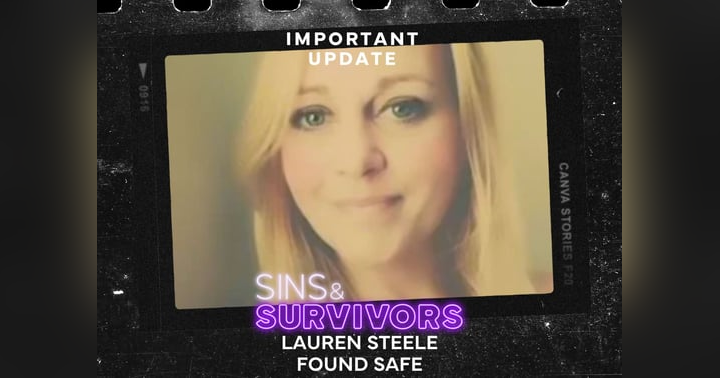
John But before we get to that, we have a very exciting update for all of you this December for our missing at the holidays episode, we share the story of Lauren Steele, a thirty six year old survivor of human trafficking who disappeared in August of twenty twenty four, she was traveling from Pennsylvania to Las Vegas when she dropped out of communication with her family. Her cell phone turned up in Las Vegas, but Lauren was missing. We're thankful to report that the Pennsylvania State Police reported that Lauren has been found safe. We don't have any additional details about her whereabouts or what happened, but that's not really our business anyway. We are just happy to hear that she is okay. And also, we went back and updated our missing at the holidays episode. So if you go back to hear about Lauren's disappearance, we took that out of the episode.
Shaun It was such a huge relief to her friends and family and we are celebrating her safe return. Without any further delay, here is our discussion on stalking in Las Vegas with our friends at Strictly Stalking.
John So they have him on camera wearing the shoes, this very similar shoes to the person who committed the crime. They have him wearing a similar outfit to the person who perpetrated the crime. They have his phone jumping on wolfson's wifi. And then the other thing was, since they subpoenaed his watch, they had his health information. So they were able to tell what his standard resting heart rate was, because that's all tracked on your watch. And then they also tracked it against his heart rate.
Jamie I'm Jamie Beebe
Jake And I'm Jake Deptula. On today's episode of Strictly Stalking, we're speaking with Sean and John from Sins and Survivors, who join us to unpack a stalking case coming out of Las Vegas, a case that intersects with law enforcement, personal violation, and the limits of the justice system.
Jamie The victim was Rebecca Wolfson, Clark County District Attorney Steve Wolfson, s daughter. She was a city attorney and a judicial candidate in twenty twenty three, engaged to a Las Vegas Metro police officer.
Jake After their engagement ended, his behavior escalated. According to police documents, Rebecca felt terrorized, frightened and fearful for her safety. As he drove by her home. He tracked her movements and misused police databases to monitor people in her life.
Jamie The case ultimately led to criminal charges, raising serious questions about power, accountability, and what stalking looks like when the person doing it wears a badge.
Jake Sean and John, thank you so much for joining us today. For anybody who doesn't know who you are and what you do, why don't you introduce yourselves?
Shaun I'm Sean Malika. I'm one half of the team behind Signs and Survivors. We are a Las Vegas based podcast. We focus on unsolved cases and missing persons, but also cases involving domestic violence, which often does include stalking. And we are on our third season, and I think including bonus content. We are over two hundred episodes.
John And I'm John, I'm the other half of survivors and the co-host and more of the techy person and not the talent. Sean is the talent.
Jake What is the criteria for the cases you cover? Do people select those? Is this something that interests you? Is it something that you're trying to seek justice for or shed light on.
Shaun I'd say all of the above. If any time a family or someone who's a survivor of a crime approaches us and asks us to cover a story, we're happy to do that, especially when it comes to missing people. Las Vegas seems to continue to have large numbers of unheard of, numbers of people missing. People reported here that go unsolved. So we definitely cover that. And that's also kind of, like you said, like a search for justice, trying to find families answers. I worked in the domestic violence space for almost twenty years, so I wanted to really raise attention to the high numbers of domestic violence that we have here in the state of Nevada. And that was that's part of what goes into it. If we can talk about policy, we can talk about best practices, we can talk about safety, then those are the kinds of issues John and I want to talk about on the podcast.
John And we also try to provide resources whenever we can in the cases we cover. We want there to be a reason we're covering them, not just telling an awful story of family annihilation. But if we want there to be a lesson to be learned for other people.
Jamie In episode one hundred and eight, you covered the stalking case involving Rebecca Wolfson. What was the reasoning that you chose this case?
John Well, this one really crossed our radar a while ago, and it was because it involved people really in the public eye. Rebecca was a judicial candidate, as you mentioned, and a city attorney, and her father was the district attorney, and her ex-fiance was a Las Vegas Metro police officer. So whenever there's a case like that with high profile victim and high profile perpetrator, not alleged perpetrator, he was found guilty. Um, you know, those are definitely ones we want to want to highlight for sure.
Shaun And this one definitely.
Shaun Involves someone abusing their authority, which I think was the one of the things that John really wanted to focus on, because John does focus on the pod a lot about how people use technology to to stalk people, to harm people. And so that was part of it as well that we wanted to talk about.
John And this was just another level for someone who is a stalker using technology to stalk other people. It wasn't just them putting an air tag in a backpack or hiring somebody to follow someone else around. He he, as you mentioned, was using police databases to track down people that were friends, visitors, guests, acquaintances of Rebecca.
Jamie And for anyone who hasn't heard this episode, can you kind of walk us through the case a little bit?
John So Rebecca Wilson was dating Christopher Young, and they broke off their engagement in July of twenty twenty three. And according to the police reports, it was said that Christopher did not take it well, which of course seems to be a bit of an understatement. Um, in that same document, it said that, um, his behavior made Rebecca feel terrorized. Frightened, intimidated, harassed and fearful for her safety. So Christopher was doing things like driving by her house and showing up in places where she was typical stalker behavior, but it came to a head on two different occasions. So in August of twenty twenty three, Rebecca had a guest over. And the next morning she got a call from Christopher Young. And he asked her if he could get his firearm back. Apparently it was still in their previously shared residence. And he said something like, I can't have random people having access to it. So that tipped her off that he must have driven by the house and seen her guests car. So it seems like from the court documents, what happened was that he drove by the house and wrote down the license plate in his phone on his notes application that was readily available eventually. And then on the twenty first, he accessed police databases to do a record check on the registration and then assigned himself. A call for service related to his own job. Duties as a police officer. Related to. Searching for information on the person whose car that was. The registration. They actually met up at the police station the next day, where Rebecca agreed to return his gun, and she recorded their conversation. And in that conversation, he repeatedly asked about the car in front of her house, and eventually she came to realize that was the reason he texted her in the first place. So that was one thing abusing police authority. But it really came to a head in October of that same year when he was doing another one of his drive bys, and he saw another car outside the house, but this time he didn't just run the plates. Instead, he got out of his car. It was around midnight, and he threw rocks at the car, shattered the passenger window, dented the door, and did five thousand dollars worth of damage to the car. So the next morning, Rebecca's friend found two large rocks inside the car and another lying next to it. So that is what prompted her to go and file the police report. And that was the initial offense.
Jamie So he's not a very smart stalker. He left quite the paper trail.
John You know, it's funny you say that because not only did he leave a paper trail, he left quite an electronic trail. So everybody has ring cameras. Right. So you can you can imagine that if you walk by someone's house, there's a pretty good chance that you're being recorded by someone's ring camera. As a police officer, you would think you would know this, but apparently he did not. So he was captured on a neighbor's ring camera, and his shoes and his outfit were apparently quite readily identifiable. It wasn't really clear from the from the reporting why that was, but I suspect it was probably like he was wearing shoes that had some sort of reflective, like maybe it was a reflective Nike swoosh or something like that, something where they could be like, show us your shoes, and they would easily match up against the ring footage. But the thing that kills me when I was learning about this was that at the time the crime was happening, they subpoenaed his phone records for for two things, and they subpoenaed the records on his watch, his Apple Watch. And that was because at the time of the incident, Rebecca said and told police that there was a device that joined her Wi-Fi network. And so it must have been someone who had the Wi-Fi password already. And it turned out that it was his phone. They identified, based on the Mac address, that it was his phone that joined the Wi-Fi network at the time the crime was being committed. So that's the first thing. That's a pretty big tell that he was in the area, and there was no other reason for him to be in the area. So they have him on camera wearing the shoes, this very similar shoes to the person who committed the crime. They have him wearing a similar outfit to the person who perpetrated the crime. They have his phone jumping on wolfson's Wi-Fi. And then the other thing was, since they subpoenaed his watch, they had his health information. So they were able to tell what his standard resting heart rate was, because that's all tracked on your watch. And then they also tracked it against his heart rate around the time of the crime, and found out that it was somewhere in the range of one hundred and seventy beats per minute at the time of the crime, and around eighty beats per minute normally. So it was a pretty clear cut case. They had some pretty clear evidence that he was the one who committed that crime to his charge pretty quickly.
Jamie And after he was charged, what was the final outcome?
John Well, happily, there was no I mean, there was there was violence in that. He, you know, vandalized a car. But happily, there was no physical harm done to Rebecca Wolfson or her friend, thankfully. So he was found.
Shaun And technically not.
Shaun Even her own property. Not her house or anything either. I'm only I'm only bringing that up because it kind of it kind of puts a wall up in between the two cases, that's all. The only reason I'm right.
John And he was charged with tampering with the vehicle, vandalism and misdemeanor stalking. He was suspended without pay from Metro, of course, and he appeared in court and was released without bail. And eventually he pleaded guilty to that misdemeanor stalking charge. The vandalism charge. We couldn't really find out what happened. We couldn't find the records for it in the in the system. Unfortunately. I'm not sure if that's because he's a police officer, but those are pretty difficult to find. But he definitely pleaded guilty to misdemeanor stalking and was given a ninety day suspended sentence. And the conditions of his release included agreeing to stay out of trouble, whatever that means, complying with the district court probation for a year, mental health and substance abuse counseling, paying restitution, which we thought was related to the car, but that's a separate case, so we're not sure what the restitution was. And also, interestingly, he was also given house arrest and he was told he had to write a letter of apology to Rebecca. So that was the punishment he was given.
Shaun And that was one of my I don't know, it sounds corny to say favorite, but I really like that they gave this adult guy the kind of punishment that you might give a middle schooler. You might ask them to write a letter saying that they learned their lesson. But I think in this case, it was it was effective because he complied with everything. As far as we know, he's left Rebecca alone. This hasn't come up again. So maybe treating someone who's behaving like a twelve year old, like a twelve year old, helped get that message across that take take some accountability for your behavior. Think about what you did. So I kind of like that that was part of the punishment, even though it does seem kind of juvenile to me. But hey, if it works, it works.
Jamie I agree with you on that. Do you know if he's become a police officer again, or what happened with the rest of his life after that?
Shaun It's only been about a year and a half, John. Two years almost. But we believe he went back to work. As far as we can tell, he still works for Las Vegas Metro, and it's been sorted out and he seems to be staying out of trouble.
Jamie Did you have any hesitation about covering a case that involves law enforcement and a prominent local family in your town?
Shaun Only in the sense that what we always try and focus on is the victim or the survivor of the crime. What do they want, or what do the family members want? And we only really cared about that part of it. If it bothered Metro to have us talk about one of their officers being involved in a crime, that wasn't something that I was concerned about. I don't think John was either. Just in terms of if Rebecca heard the episode, would she think that we told the story truthfully? Would she feel that we portrayed what happened accurately and would she understand why we told the story? That's kind of what I worry about.
Jake We speak to survivors of stalking, so we have that direct communication, that direct relationship. When you actually speak to the families and they're in a position where they're not getting any support from the police, or they need someone to lean on the case, start asking questions. Have you ever found yourself in that position where you have to put some pressure on the police force prior to releasing the episode? Because we know that's ultimately going to also have an impact?
Shaun You know, where we have we struggle is we don't we don't seem to get a lot of traction with Metro, at least not yet. We've tried and we've tried FOIA ING some of their information, but we mostly get ignored. So I keep hoping that we'll hit on a case that will get their attention, because I think we could be a tool for them, especially if they have a missing person or something unsolved. We can be a tool for them. For that we have a large audience. We could help, but we don't seem to be on their radar in a good way or a bad way. So I'm not as concerned about that. Where we have had issues in the past have to do with when there is, you know, things like domestic violence or any kind of murder. There can be tension in the family between who they think is responsible and what they think the outcome should be. And we've had a couple of cases where we've had, let's say there's a a girlfriend of the victim, but also like a brother of the victim. And the two of them have a different idea as to how the story should be told. I think that's where John and I have felt the most tension is within the family, because there's so much grief, there's so much pain that there's there's can sometimes be infighting between family members about whether they even want it on a podcast. There can be disagreement about that.
Jake Do you ever find yourself in a position where you reach out to a family and they've just been resistant and they don't want any support. Do you ever find yourself in a sort of a conflict with that, where the public should know about this, but the family isn't really being responsive?
John I think we've ever had a case where the.
John Family doesn't want us to cover it. Have we? We've definitely had some feedback where the family has information, or has information that isn't in the public reporting isn't in the court record. And at times isn't really something we can prove. So they'll come to us and say, you know, there's more to this case than you know. And they'll, you know, send us information. And and if it's something that we can verify, we'll go back and look at the episode and add to the episode or take things out of the episode if they're not happy with that. But if it's something where they come to us and say, you know, I really know who did this. And it was it was this guy Bill. And we're not interested in implicating anyone who's never been implicated in the public record based on someone's theory will never do that.
Shaun I was going to say the the episode we have.
Shaun Coming out is a double homicide involving a boyfriend and a girlfriend, and we were able to speak to the young woman's father. And I did reach out to the young man's mother, and I know she saw my message and read it, but she didn't respond to me. And that caused a little bit of a conflict for me internally, because I felt like the dad was saying like, yes, please cover this. But to have a no answer from the other half of the victims did kind of concern me. I hope that if she hears it when she hears it, she's comfortable with it because it's an unsolved double homicide. So it is important to our community. It's important to their families and friends. I just wish that we could have had an affirmative green light from her, but it didn't happen.
Jamie And so in this case, what sources did you rely on most to get your information? Because stalking cases are notoriously quiet in the media. Unless it's a very big case with a celebrity or something, how were you able to find sources?
Shaun I think Rebecca was, at the time, borderline a celebrity because of who her father is. That's why we wanted to cover it, and also because there was so much reporting about the ins and outs of the case. Just in the more the mainstream media, the local television news, the Las Vegas Review-Journal, we were aware of it and we were able to cover it. And it was a good opportunity for us to talk about stalking because, like, you're right, it doesn't it doesn't get covered. And because of the notoriety of the victims and the fact that it was a police officer that was doing the stalking or was accused of doing the stalking, it was covered in the press. So that gave us access to information that we probably wouldn't have had if it was just two average people out of the public eye. But John was able to get some court records out of the Eighth Judicial District. Right. John, is that right?
John Yep. Like you said, because they were so high profile, there were a there was a lot in the media about the case where with the normal stalking case, especially if if it's a stalking case that ends in property damage, those things aren't going to be in the media at all. We're not even going to know those things happened. Generally, there are a lot of cases where, you know, we've talked to victims and heard the same thing where the police say, sorry, we can't do anything until something, something really happens or until he really does something. You hear that all the time. So those things aren't going to be in any public record. So, you know, in a way, there was a lot of information out there for us to draw on.
Jamie When you researched this case, was there anything that surprised you or anything you learned about stalking?
John I was surprised. I was pretty shocked by the fact that the person who was doing the stalking was a police officer and did things like war reflective shoes and brought his phone and his Apple Watch. When he committed this crime and used the tools of Metro Police to make it even worse. Like all these things were really surprising to me. They were like big, big, big mistakes that helped him get caught very quickly. So I found that really surprising, and I was definitely interested in talking about that. One of the things I said at the end of the episode was, if you break up and you have a stalker, you should change your network password. But then I thought, maybe not. Maybe leave your network password the same, so that if the person comes by and is stalking you, you have a record of them joining your Wi-Fi if they're not thinking about that. I'm on the fence about that one. But yeah, I found that one really interesting from my nerdy tech perspective.
Shaun It never ceases to surprise me that people will put everything on the line in order over a breakup. I think that part was really surprising. I mean, this guy, he's got a career and he abused his position of authority. He risked everything. I mean, he could have lost his job over this breakup. I think that a lot of times that's always the questions I'm left with after most cases we cover is like, what were they thinking? What were they thinking? I think that was the that was kind of the the surprise I think I had. And I was also surprised or like, I guess, pleased that his coworkers were willing to hold him accountable. And this didn't get swept under the rug. And that probably has a lot to do with who Rebecca Wolfson's father is. But I was hopeful that maybe folks who are stalking and they think are being stalked, and they are thinking, I'm not sure I should tell anyone. I'm not sure how it's going to be received. I'm not sure I'm going to get the help I need. There are likely officers that understand and empathize with what you're going through and can help you and will help you. Even though we don't always hear those stories, I think that that this story showed me that there were people who weren't just going to let it go.
Jamie How do you feel then, about the sentencing in this case? Because I personally think because he's a police officer, he should have had a more severe sentence and shouldn't be a police officer anymore. But it seems like he kind of just got a slap on the wrist and went on his way.
John I agree the sentence was really lenient. I think you're right. I think police officers have to be held to a higher standard, so you're probably right about that. What I was going to say is that it seemed like a proper sentence, because there was no physical harm done to her, but there was emotional harm done to her. She felt terrorized and all the things we described it probably is too light of a sentence for him, given that he was a police officer. But at the same time, it didn't end in violence against her or her friend. So it almost feels like if truly, he is moving on, leaving her alone. And this was the punishment that got that to happen. If this was his wake up call, then I'm okay with that. In this case, if he does it again, ask me again and I'll tell you I was wrong.
Shaun I understand anecdotally that for police officers to actually be imprisoned, be in jail. They often have to be segregated because they can be victims of violent crime by other offenders that they're locked up with. There could be some resentment. It can be dangerous for police officers to be inmates in jail or prison. So maybe like a more severe house arrest, or maybe it should have been six months. I mean, I agree with you, Jamie. Like it should have been more severe, but at least I understand why the justice system hesitated to actually put him behind bars, because it probably would have been expensive and a hassle and potentially dangerous to do that. But I still think it should have been a little less convenient for him. A little longer time going without pay or something like that. Like, I think the mere fact you're right that he abused his power. He accessed police databases for criminal behavior. I think that should have been punished more severely. He probably should have been charged with more than just misdemeanor stalking, given everything he did.
Jake What are your hopes when it comes to sharing a story like this? Do you ultimately hope that it's going to basically change the dial a little bit in terms of put more pressure on law enforcement? Do you hope to bring awareness? Do you hope to bring some sense of comfort or healing to families?
Shaun Absolutely. All of those things. We want folks to understand that these issues are complex, that the solutions we have can be helpful, but not always. And they often fall short that these crimes are not treated with the level of severity they need to be. Especially because unfortunately, you all know, stalking is something that escalates and it's such a red flag for ultimately leading to fatality for murder. It's one of the key red flags that you see before someone is murdered. And without us treating it severely, that's unfortunately the end result that happens. So we want to raise awareness. We want our community to understand that there are resources you can go to for help. We want our community to understand that the solutions we have may not be meeting the need, and there might be other things we need to do. And we do want victims and families to know they're not alone and to, yes, hopefully be comforted by that fact.
Jake Where do you see the flaws in Las Vegas when it comes to handling stalking cases, and ultimately, what kind of things fall through the cracks?
John I would say the problem that we always see is that these cases aren't taken seriously. They're brushed off by the police until they become too severe and things have gone too far and they've escalated. And people do things they can never take back. So that's the thing that I want to highlight. I want to put pressure on law enforcement to take stalking seriously. That's my hope. And not only when it's a local official.
Shaun And I think Vegas, with its reputation for vice and it is it is true. There are so many things that are legal here or gray area legal here that I think sometimes the police start from a point of this is a misunderstanding, or this person's going to sober up and everything's going to be okay or something like that. Like they look to our environment to explain somebody's behavior where I wish they would do the opposite. I wish they would consider that kind of environment to be more dangerous for people and and be more proactive when it comes to someone being reported missing or saying that some guy has been following her home from work. I wish they wouldn't just say like, That's Vegas. That's kind of how it goes. He'll sleep it off. Blah blah blah. Like, I wish they wouldn't use that excuse. Let Vegas be the excuse. I wish they would let that be the reason why we need to be more serious. Because we have access to alcohol twenty four over seven. Weed is legal. Sex work is illegal, but also advertised to you freely on the strip. I mean, it causes it makes this tense environment where people are using substances. People are using the excuse that they're in Vegas. And you know, what happens here stays here. And I think it causes us to have this community where people are at risk, but we don't really want to talk about it because we want it to feel like a place where you're just having a party and everything's going to turn out okay.
Jake Can you talk about the work that you've done outside of podcasting to bring awareness to the relationship between stalking and human trafficking in Vegas.
Shaun Because Vegas has this reputation for kind of being an anything goes city. I think folks who come here, they're not aware. They think that prostitution or sex work is legal on some level, and it's not. Even though there are plenty of people engaged in it. But you kind of see this gray area everywhere, and I think that folks may or may not know when they, you know, make an agreement with a sex worker that it's illegal. That's illegal. But also that that person could be being trafficked because it's not legal here. So that puts people at risk. It's you can't you know, sex workers don't can't really complain to anyone or report a crime because they're committing a crime. It kind of creates this gray area, unsafe gray area for folks just like anywhere else, right? Anywhere else in the country except for some counties here in Nevada. It is illegal. And then you have folks falling through the cracks, but people think it's legal or at least behave like it's legal here. And I think that puts that puts people at risk. Whenever there's a big event that happens here in town, the nonprofits in town, the shelters, they go on high alert, ready to be there because folks will see that this is a city where there is money to be made. So they will put people in a position to make that money, whether that is selling drugs or soliciting sex work from folks. So it's sort of can be falling in that gray area, like where people are letting it happen so long as no one gets hurt. And it's kind of creating this gray area for crime to be happening right under folks noses, where people are having sex with sex workers and not even realizing that what they're doing is illegal. And that just bleeds over into the entire community, into the culture of it, that, um, women are another commodity or I shouldn't even say women. It's like people of all genders. They're just like another, another commodity, something you can access here. Like alcohol, like weed, like gambling. The Vegas that most people experience is the show Vegas puts on for you. It is a performance we can get you or show you whatever it is you want to see. You want Cirque, you want sports, you want dancers. You want extravagant dinners. Like we have it all and we can. We put on that show for the tourists. But behind that is I often compare it to if you've ever I. I personally have not. But this is what people say. You travel to one of those resorts in like Jamaica, and they say it's not safe for you to go outside of the resort because it's actually dangerous for people. This is your only safe space. I think that Vegas suffers from some of that, because all of our attention and energy is put into putting on this show, that our community in the background is always suffering the effects of that. Because we're not rich, we don't have access to those VIP backrooms. We're talking about folks, but that can get booze twenty four over seven, can get weed, twenty four over seven can gamble at the supermarkets and the convenience stores. And I think it just it hurts our community because in the background are all these people who are trying to live their life in a city that's just full of all of that temptation. I think it hurts our community at times, but people don't see it because what do they see? They see the sequins and the neon. They don't see the rest of that.
Jamie After having done this case about Rebecca and researching the stalking aspect of it, do you see more stalking in other crimes going on in Vegas or in the cases that you're going to be doing next.
John We definitely think and we talk about this all the time, that so many of the cases we cover have a common element of domestic violence, obviously, because that's what we focus on. But many of those also have stalking as a common thread as well. So we see stalking inside of our domestic violence cases all the time. I would say nearly all of the domestic violence cases that, you know, end horribly often. You know, they they all have stalking in there as well. Estranged husband, stalking wife. She's left because there's a domestic violence situation, then there's stalking, then there's violence. It's just a very common pattern. We see it all the time, and it it feels like it's taken seriously rarely by authorities. And the tools in place to protect people from stalkers are just Insufficient. I mean, you know that far better than we do. We can we can all name cases where people had to go to extreme measures to protect themselves because the police wouldn't, you know, people relocate, they change jobs, they experience horrible things in their lives just to try to keep themselves safe. We see that a lot here for sure.
Jake I have a question for Jamie about your other show, The Last Trip. What are some of the challenges that you have when you're trying to find out what kind of crimes that a community takes seriously or doesn't?
Jamie Well, most of the crimes that I cover in the last trip have nothing to do with stalking, because it's just people who went missing or were murdered on vacation, and so they're usually by themselves. It would be very rare to have a stock in case of somebody on vacation.
Shaun Jamie, on your show The Last Trip, do you find that either it's true or there's rumors that because it is a tourist destination or a place people go for vacation, that the authorities cover stuff up or try and make it less of a big deal to protect tourism in the area, because that's something we hear about Vegas. I don't know if in the other locales you've covered.
Jamie That's definitely true in other countries, because a lot of the ones that I cover are at a resort or at a very tourist, tourist friendly location where they rely solely on tourist money. And so any crime is covered up. I'm gonna assume that a lot of that is covered up in Vegas as well, but it might be a little bit harder to cover up because of the social media aspect that we have in the United States.
Shaun I think what people say about Vegas is that when people die by suicide is the most covered up thing. If that happens on resort property, hotel property, the press will tell you that they don't cover suicides anyway because people tend to copycat. It puts that idea in their head, so they try not to avoid it. But that's usually what we hear is that folks will die by suicide and that will be covered up. But it's pretty hard to cover up a homicide. And we've covered cases of people killed on resort property in hotels. That is the perception that, like other locals have about how big tourism is here, that covering things up is a big goal of the of Metro and others.
Jamie Well, it's actually quite rare for somebody to commit suicide while they're on vacation, with the exception, from what I can tell of Las Vegas. And I think that's because of the loss of money, the alcohol, the drugs. It's a little bit different than a lot of tourist areas where of course, everyone's drinking and partying because it's vacation, but Vegas puts it right there in your face, and especially with the gambling. And somebody could just lose all their money. And if they're already on the edge anyway, suicide becomes an option, even on vacation.
Jake I always go back to the movie Leaving Las Vegas, and it does really hit the intersection of mental emotional, financial breakdown, but can be something that, you know, have fun. Have a great weekend. But also it can really do damage to your psyche and be that last stop, unfortunately for people.
Shaun Absolutely. It's very like I said, there's a lot of temptation, but it can it can bring a lot of pain. And we do have so many missing people that just that at the time they disappeared, maybe the authorities thought, hey, you know, they're going to show back up. But now they've they've been gone for decades and with no trace. And I think sometimes probably like Jamie said, suicide became an option for them. It's a rough place to live. We put on a beautiful show and it's it can be a ton of fun, but if you have anything going on in the background, it can just suck your soul away.
Jake From a legacy standpoint. What impact that you'd like to have on listeners? What impact do you'd like to have on crimes, and what impact you'd like to have on the city of Las Vegas?
John For me, I me, I think it's really just getting resources out there. I've always said from the beginning, if we can cover things like family annihilations and prevent one from happening, if someone gets the resources they need to get their family safe, I'll take that. If one person can get away from an abusive partner, then that's all we're after. Just, you know, getting awareness out there, getting resources out there and making sure people know the signs of domestic violence. So many times you hear people ask like, am I am I overreacting? My my husband punched a hole in the wall. Is this, you know, he put his hands on me once. He choked me one time, but he says he's he's really sorry. Educating people about, you know, what is what is acceptable, what is not. What is a serious red flag for murder. These are the things we're trying to get out and, you know, help people understand. So if we can do that, I feel like we've done a good job.
Shaun Especially here in Vegas. There, there are resources available. I mean, if something happens to you when you are on vacation here, if you are, somebody slipped something into your drink. You end up getting sexually assaulted or or someone is following you or following you to your hotel room. I mean, we do have shelter. We do have safe places for people to go. And I don't think that a lot of folks are aware of that. We have agencies here in town that have put people in a different hotel when they're on vacation to help preserve their safety, or let them stay in shelter or help them out with a bus ticket to get back home so they didn't have to drive back home with a person who had abused them or threatened them. Those resources are there not just for locals, but for anyone who comes here to enjoy Las Vegas if it if it goes sideways. We do have resources here. John's right. That's really key for us is we want people to understand that we are a real city with real people with real problems, but also that we are a caring city. We do have a community behind us and we can help Jake and Jamie. So this is for our listeners. Will you share a little bit about Strictly stalking? I know you've been doing it for, I don't know, six years now. You have over three hundred episodes. Can you just share one? Each of you share one of the cases that has stuck with you since in the time you've been working together?
Jake I will say this is that from the cases that we cover, the ones that really disturb me is when there's children involved. Anytime there's any sort of child stalking that really enrages me in so many ways in terms of someone actually doing that. We've had strangers do that. We've had parents stalk their children, things like that, and it's hard enough to grow up and deal with a lot of things. And I'm not even mentioning some of the other things that have happened to some of the survivors we feature. But anytime there's children involved, that really does strike an extra cord to me in the cases we cover.
Jamie I think it's interesting how all these people come together, and we talk to so many people that have been stalked and some people, it's their first time talking about it. They haven't told a soul. Some people have spoken out about it, have become advocates. But when they come and speak on the show, they're at the same exact place where they're just trying to help people. They're trying to get the story out and the awareness so that people listening don't feel so isolated and alone, like they almost always once did or still do. And afterwards, everybody has said how much better they feel just getting it off their shoulders. And for that, that's kind of for me. What makes me keep doing it week after week.
Jake And one of the things that we do is we encourage people to come forward at their own pace. You know, we've had people come on before where they'll start listening the show and years later they reach out. We have other ones that do a TikTok and they'll come on next week, those kind of things. So we always encourage people to come on when they're ready and only they know when they're ready. Nobody can tell. No podcast can tell them. No law enforcement, no therapist. It's really about their readiness to come forward and give themselves grace. With that, we try to protect the survivors. We try to give them a very comfortable, safe environment, which in podcasting there are more people doing that. But as you both know, there's a real art to understanding victim advocacy and creating comfortable, safe, non-judgmental environments because it doesn't happen as often as you think it would.
Shaun So what do you think sets you two apart? Why do survivors of stalking feel like they can come on your show and tell their story?
Jamie I think one reason is because we do interview survivors of stalking, and so we're not looking for a salacious story. We're not looking for anything that's gonna, you know, hit the newsstands. We're not just speaking to celebrities. It's anyone, anywhere, anytime. We let anyone remain anonymous when they come on the show, it's really important for safety. And the other thing that we do is we don't want to give the stalker attention. And I think that we just kind of downgrade that person and we call them the stalker. That's it. Like, they get the lowest term possible that we can call them. And I think that's important for survivors to just push that person down, tell their story and let it be their story. Take their story back.
Shaun Without naming any names. Have you ever had someone in the public eye come on your show and tell their story?
Jamie We have. We've had several celebrities come on anonymously, and as themselves and their stories are just as similar as anyone else's stories, it's the same feelings. It's the same emotions. It's really no different, except they're in the public eye.
Jake It only takes one person to stalk to. Somebody can have no social media account be stalked, and somebody can have millions of followers and be stocked so you don't know where they're going to come from oftentimes.
Shaun What about stories involving law enforcement as either the stalker or the victim of stalking? Do you find that's pretty common or rare, or.
Jake It is becoming more common? Some of the first cases that we've covered were about a couple who were both law enforcement officials, and they broke up, and one of the police officers stalked the other police officer and used a lot of tactical things in order to surveil their ex, used inter-department information and resources in order to get that person removed from certain detail, from certain activity that would further their career, basically putting an end to their ability to rise up through the ranks. We've had law enforcement stalk people that they've randomly run into in that capacity. I think what we're seeing is more people are feeling comfortable to come forward and share that there is a stalking case involved with a law enforcement officer. Then let's say they were at the beginning of the show. I think we're seeing a lot more accountability and a lot more people also gravitating towards TikTok and using that platform as a way to get the story out. And then they feel comfortable with us and sharing their story on our show, because we give them time to tell it from A to Z in their own pace, at their own pace, at their own comfort level.
Jamie And we are so careful and we really make sure that the survivors are ready to talk about what has happened. And we edit thoroughly to make sure that there isn't anything identifying unless they want it to be. Even in that case, we discuss it ahead of time to make sure that's really something that they want, is to say their name. And that's usually if they've become an advocate, they're working in the field, they've written a book. Their name is already out there with that story. Otherwise we kind of advise against it.
John How often do you guys see that there is overlap into domestic violence in the cases you cover, which is obviously strictly stalking?
Jamie There's overlap in any intimate partner relationship of stalking. There's always some form of domestic violence, whether it's emotional or physical. You know, just straight up psychological torture for the most part. It's always overlapping domestic violence and stalking. They just go hand in hand. Whether it's stalking during the relationship, after the relationship ends, when you're trying to leave, even later on, you don't even realize it until later on. It's it's almost always going simultaneously.
Jake And when I mentioned this before, some of the cases that we've covered involving children aren't just about stalking. There's S.A. involved, there's DV involved. So there's a certain numbing to this, which is very unfortunate. And many of the survivors that we have on have suffered from other things as well. They are multi crime survivors. So when I mentioned the trauma that's a huge impact. Okay. And for them to come forward and share their stories in such a public way is not only challenging, but it speaks to the volumes of their bravery. Trauma takes a certain amount of healing, a certain amount of time, a certain place for it. So that's another thing I would say too, is that when you listen to these stories, a lot of our survivors use these and share them with family, share them with friends because they don't want to relive these every time, you know what I'm saying? They can use this sort of as a document and what they've gone through, and it's changed a lot of people's lives, which for us, it's amazing to think, well, they can share this story, and all of a sudden somebody understands me for the first time. I'm very grateful for that.
Shaun When you cover some of those heavier stories, how do you all decompress? I know, like victim advocates talk a lot about self-care. Do you want to share some of the ways you take care of yourselves after you deal with a particularly traumatic story.
Jamie Yeah. You know, in starting the podcast, that was something I didn't see coming. I didn't realize how much it would affect me, especially with the domestic violence aspect of it. I just didn't realize it. And I, I would get so upset during after episode sometimes, you know, I'd be sitting and thinking about it and it just doesn't. It doesn't leave your head after you hear someone's horrific story. So I've had to just kind of compartmentalize it a little bit as far as my own life and spend a little bit more time with family, and remember that what we're doing is helping people. And so that's the point of it. But hearing it every week and talking to people multiple times a week about it is definitely hard. It's it's hard on your soul to see what people have gone through, but also they're still here talking to us and turning it around to help other people. So that's really the takeaway for me that helps me get through it.
Jake My biggest problem is always wanting to do more. Right. You're just getting raged by these stories, and you just want to get out there and do more for the survivors. And I think part of the thing is that you realize, at the end of the day, how grateful they are just to be heard, just to be believed, just to be in a position where they're not being put under a microscope and having to be revictimized over and over and over again. That, to me, is incredibly rewarding to feel that we are making a difference in their lives and just by putting these stories out, which has its challenges. But the rewards are far more impactful than I could have ever imagined. Going into this, I had no clue what the impact would be on my life, and also on a mission to share these stories and amplify these things and try to do good work and align myself with other people who are really trying to do good things in the world.
Shaun I can relate to that because I've worked in domestic violence, victim services, mental health, and you feel like you want to do more. And in a way, the podcast is a way for me to do more. I kind of see it that way. It's something I can do to help, to raise awareness, spread resources. I get that it helps to know the podcast is important and it impacts people. And that was going to be my next question. How often do you hear back from survivors about their experience after recording? What are some of the things they say to you about the experience?
Jake I can tell you this is that oftentimes, in fact, the majority of the times they feel that they can breathe again after sharing their stories. They feel like it's cathartic, therapeutic. It feels like a therapy session in many ways. Right? And they go through cycles of feeling that sort of euphoria after that in terms of getting it out, being believed. And then by the time it comes out, we've generally had the reaction being like, I finally feel validated. I finally feel like people will support me, people will believe me. And each survivor has their own criteria for this. Some people, when they come forward, it's taken years to get to that point. Other ones, as I mentioned before, it happens in a week or something like that when we can schedule it. Some of the things that Jamie and I have discovered within the podcast realm are how often stories overlap. We both have other shows that we work on. We've created, we've produced, and one of the things that I found when researching, when producing, when hosting strictly stalking, is how often people that gravitate towards stalking stories may have never been stalked, but they've definitely been through a bad, dangerous, or bizarre relationship or a dating scenario. So the other show that I do is called Love Less Fear, and it's about the dark side of dating and relationships. It's similar to strictly stalking in format, except I do a lot less talking. There's really only two points that I talk is at the beginning and the end and then ask questions. But I turn over, much like we do with strictly stalking the mic to the survivor, and I try to get the story as it unfolds so we feel like we're there with them. What I'm trying to do is remove a bit of stigma, a bit of judgment when it comes to people sharing these things, you know, oh, I would have done this or I could have done this. You really don't know what you would do until you've walked in their shoes.
Jamie And I have another podcast called The Last Trip. I love traveling, so I really wanted to do something in that world rather than be a travel agent. So I, you know, found myself traveling a lot solo, and I would always look up the place I was going to go, you know, to see what there is to do. And then I started looking up the crime statistics, and then I started looking like, hey, who's gone missing? Or, you know, what's the real crime there. And I started coming across all these stories, and you go on vacation and you're so excited, you're traveling and you're doing this and that, and it must be awful to go missing. Something terrible happens to you. So I wanted to bring awareness to those people who were traveling in another country, because it's also so hard for their families. I mean, imagine sitting at home and you get a call or you don't get a call and you never hear from your loved one again, and they're in this other country, a language you don't speak. Maybe you've never even been to that country. What do you do? How do you even go about finding this person or finding out what happened? So creating that awareness and trying to help those people. And I also wanted to show that while there is crime in every corner of the world, no place is really better or worse than any other place. They're really all similar. And wherever you want to go, like you're not going to Mexico is not that bad. There's not crime everywhere in Mexico. The cartel is not running around murdering people. If you're going to Mexico and you're laying on the beach, chances are you're going to be just fine. So I also give a lot of safety tips on how to travel correctly, how to be a good tourist, you know, not do anything that would get you in trouble or that would compromise your safety. So that's kind of my little baby podcast that I love. I've done one hundred and fifteen episodes and, uh, just keep going and going. Unfortunately, there's a lot of cases out there.
Jake Sean and John, where can we listen to Sins and Survivors and follow you on social media?
John The best place is to start at our website. Simpson survivors dot com. And the episode we were talking about today, you would find that at sins. N108. It's our one hundred and eighth episode. You can always find them on our website though.
Shaun And you can follow us on Instagram and TikTok at Simpson Survivors and find us on Facebook at Simpson Survivors.
Jake Shawn and John, thank you so much for joining us today.
John Thanks for having us.
Shaun It was great. Thank you so much.
Jamie Thank you guys. If anyone out there is in need of help or is a victim of stalking, please reach out. You can find a list of resources on our Instagram at Strictly Stalking Pod.
Jake If you'd like to share your story with us on Strictly Stalking, you can reach us at Strictly Stalking Pod at gmail.com. That's strictly stalking pod gmail.com.
Jamie As a listener of Strictly Stalking, please leave a review and rate us five stars on Apple Podcasts, Spotify, Amazon Music or if you listen.
Jake I'm Jake Deptula.
Jamie And I'm Jamie Bibby. Thank you for joining us on today's episode of Strictly Stalking.
John Thanks for listening. Visit sinspod.co/subscribe for exclusive bonus content and to listen ad free. Remember to like and follow us on Instagram, Facebook, TikTok and threads at Sins and survivors. If you're enjoying the podcast, please leave us a review on your podcast platform of choice. You can contact us at Questions@SinsandSurvivors.com
Shaun If you or someone you know is affected by domestic violence or need support, please reach out to local resources or the National Domestic Violence Hotline. A list of resources is available on our website. Survivors, comm and survivors. A Las Vegas True crime podcast is researched, written and produced by your host, Sean and John. The information shared in this podcast is accurate at the time of recording. If you have questions, concerns or corrections, please email us. Links to source material for this episode can be found on our website. Com.
John The views and opinions expressed in this podcast are solely those of the podcast creators, hosts and their guests. All individuals are innocent until proven guilty. This content does not constitute legal advice. Listeners are encouraged to consult with legal professionals for guidance.